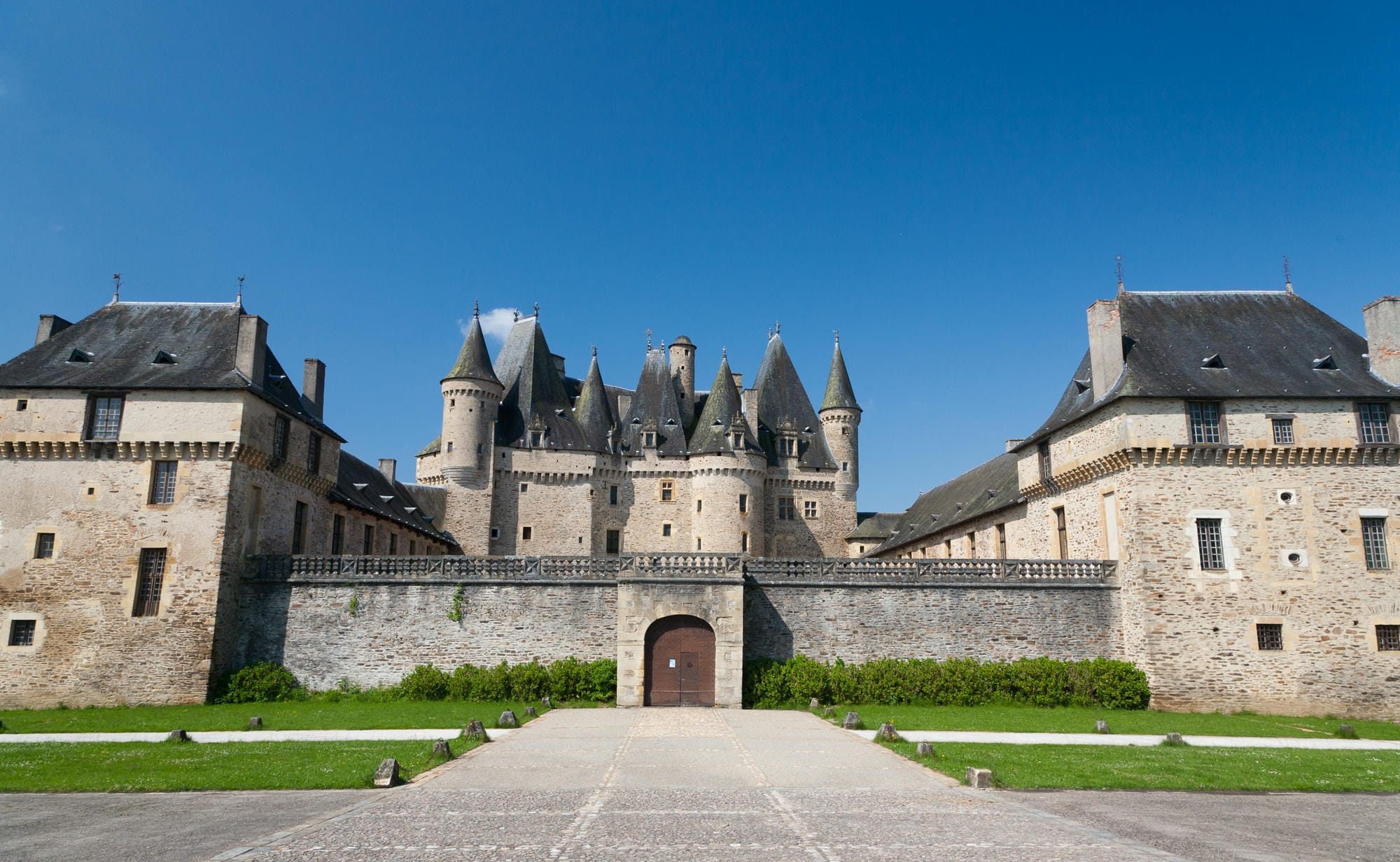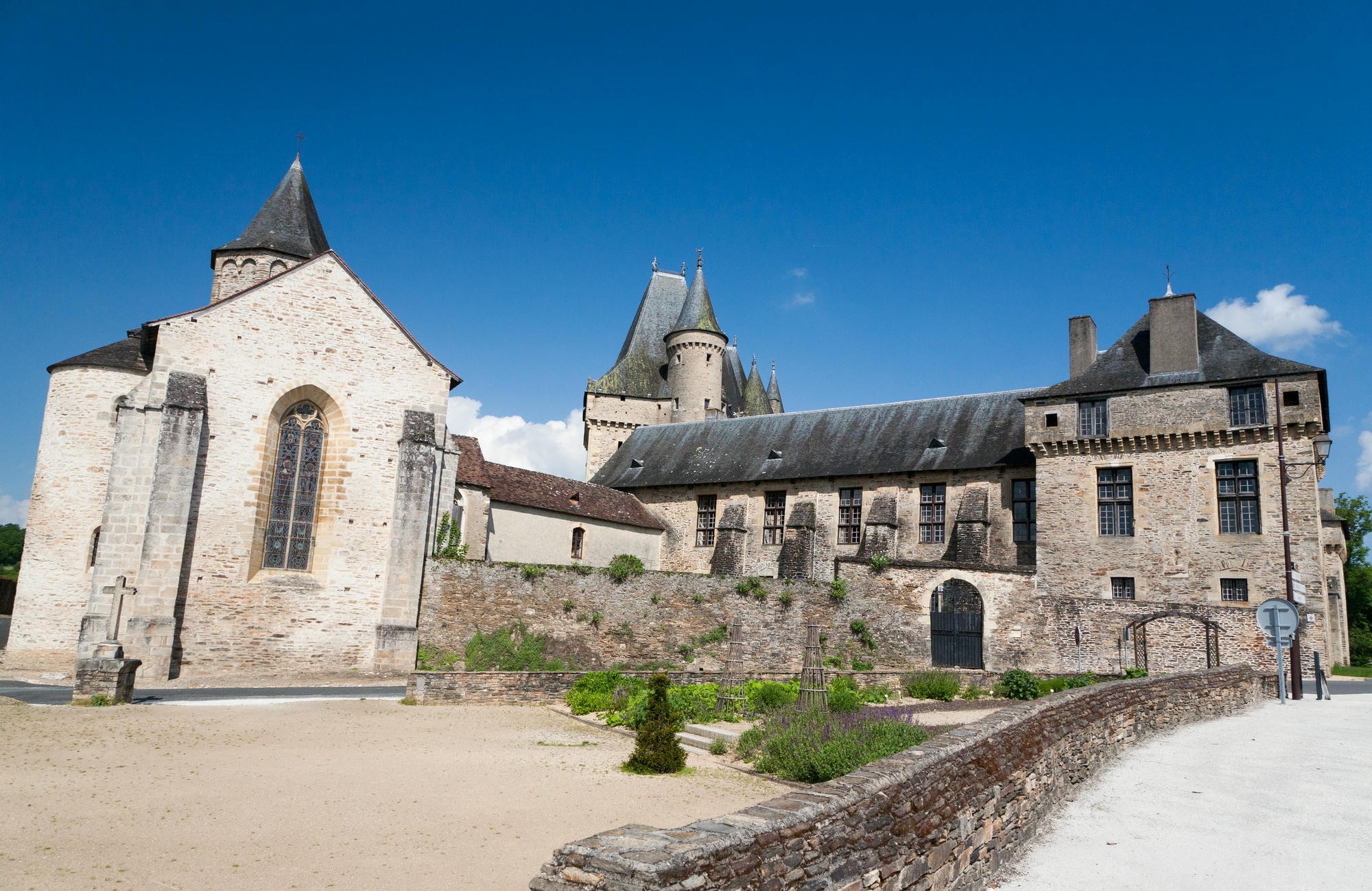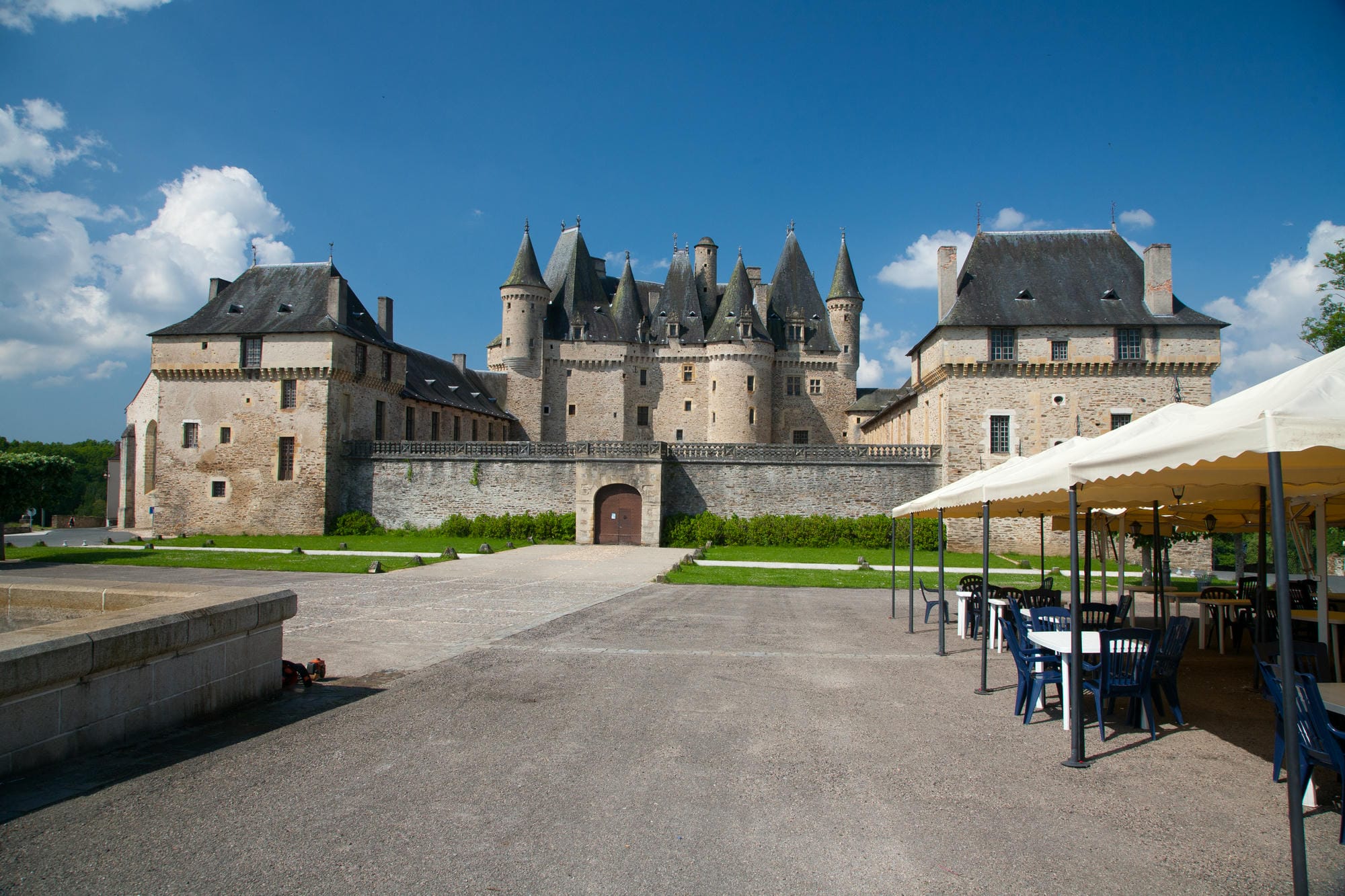


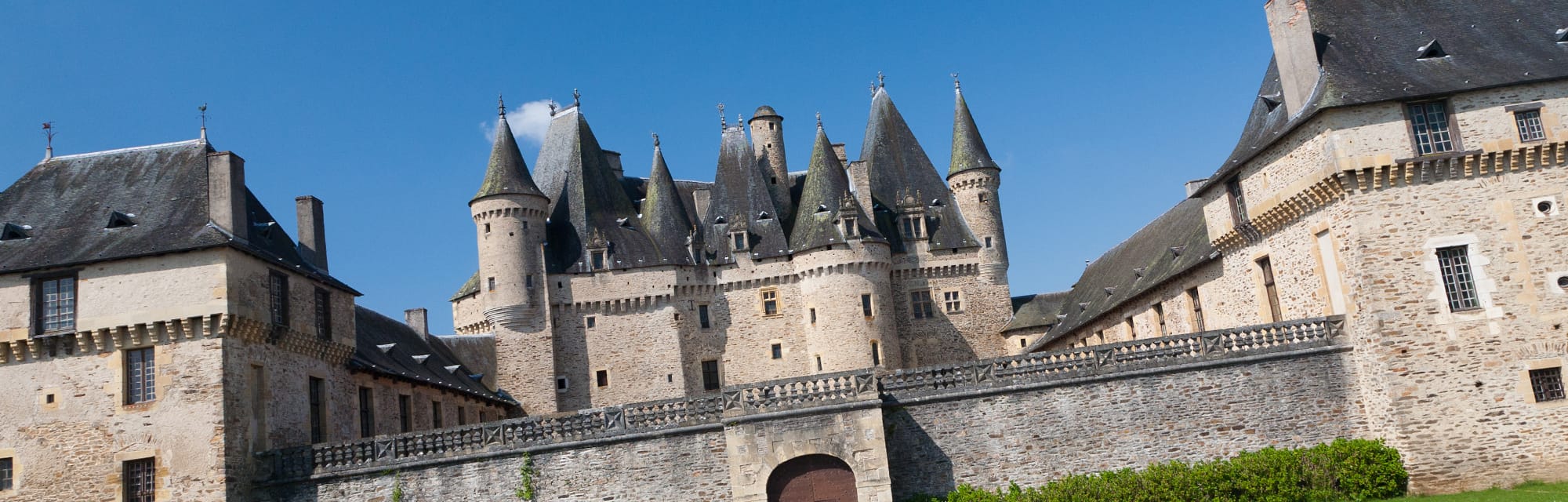

Just 25 minutes from Camping Château le Verdoyer, the Château de Jumilhac-le-Grand stands as one of the finest excursions in the Périgord Vert. A classified Historical Monument perched on a rocky spur overlooking the Isle River from a height of over 40 meters, the Château de Jumilhac-le-Grand is one of the most fascinating landmarks in the Périgord. It is renowned for its spectacular rooftops—a tangle of cones, turrets, and pyramids adorned with allegorical sculptures—which experts consider unique in Europe. If you are staying at Château le Verdoyer, this visit is a must!
Eight centuries of tumultuous history
The site’s history stretches back long before the Middle Ages: the Gauls mined gold here, and the Romans operated an agricultural estate. The fortress later endured assaults from the Visigoths, Saracens, and Vikings before the first stone tower was erected in 1152. Situated at the crossroads of the Périgord and Limousin regions, the castle served as a strategic defensive line for centuries.
It was Antoine Chapelle, a wealthy master of forges, who radically transformed the site at the end of the 16th century. By generously financing Henry of Navarre in his quest for the throne, he was granted the title of 1st Count of Jumilhac in 1597. In celebration, he covered the castle with those extraordinary roofs, adorned with seigneurial and alchemical allegories—as Antoine Chapelle was also a passionate alchemist, convinced he would discover the secret of the philosopher’s stone. The residence was later elevated to a marquisate in 1655 under François Chapelle, who remodeled the castle in the style of the ‘Grand Siècle’.
After the Revolution, the castle changed hands several times—including those of the scandalous financier Gabriel-Julien Ouvrard—before being purchased in 1927 by the Chapelle de Jumilhac family, who undertook its restoration. Open to the public since 1964, it now welcomes nearly 11,500 visitors each year.
Interiors rich in legends
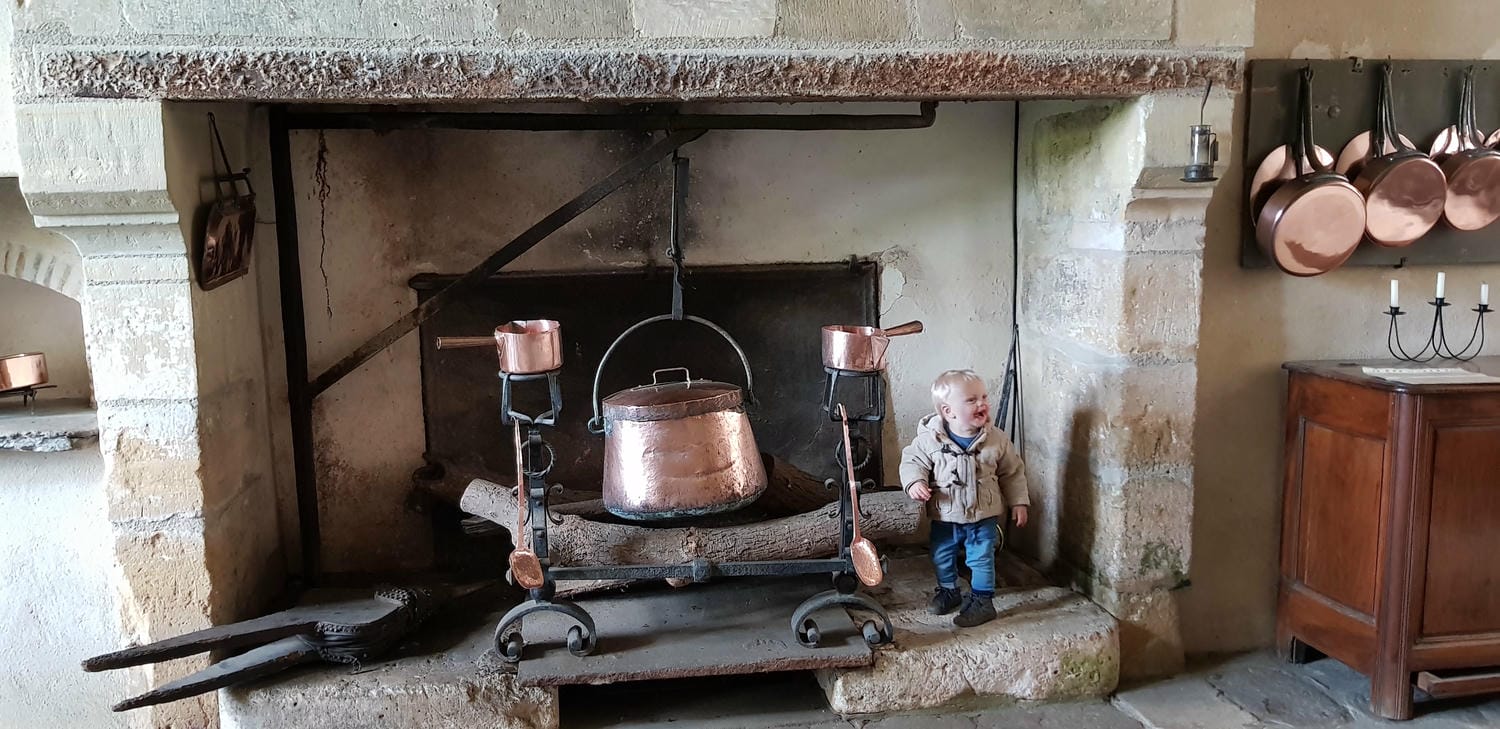
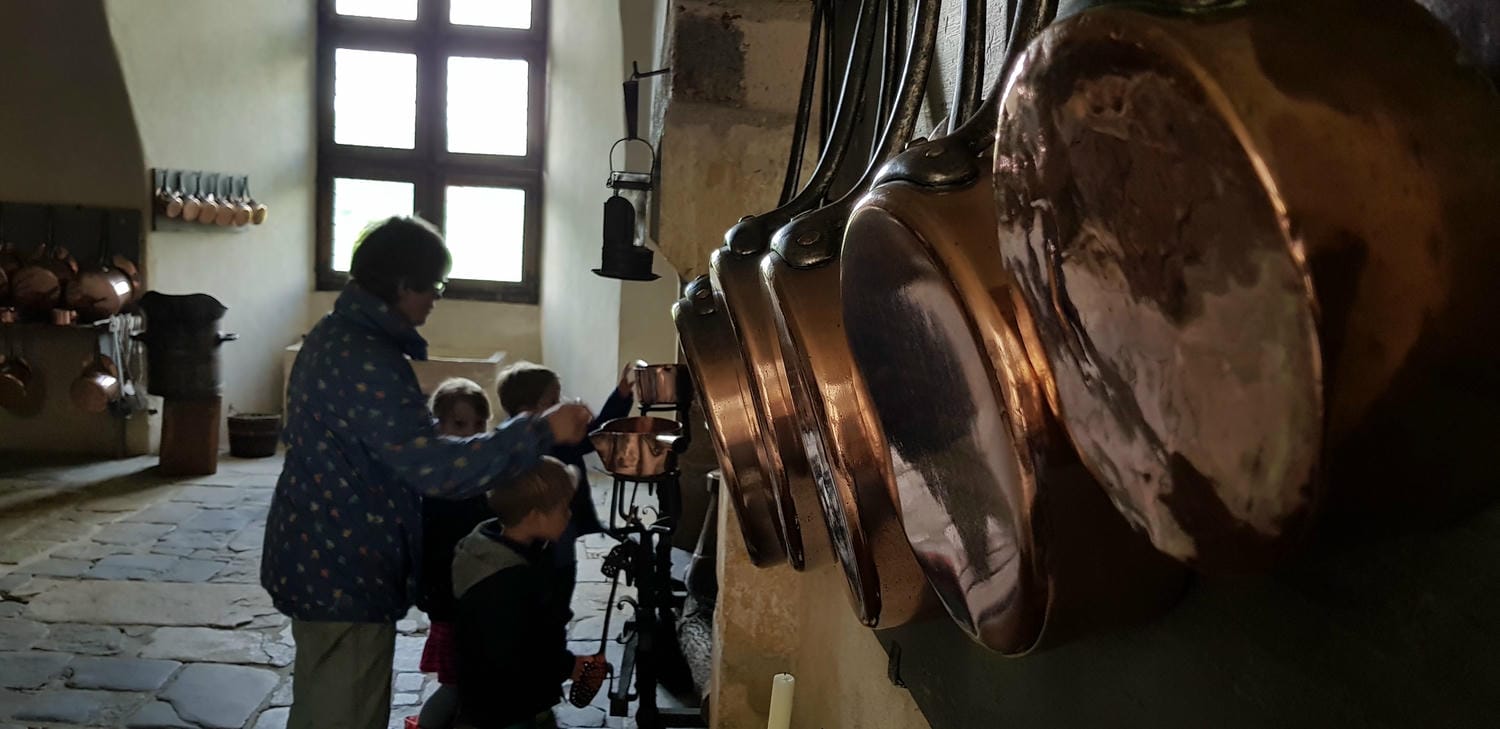
Inside, every room tells a story. The paneled grand salon, the Louis XIII ceremonial staircase, the carved wooden fireplace, the dining room with its adobe rosettes, and the vaulted kitchen with its copper pots… You traverse the centuries with every step. But the room that leaves the greatest impression on visitors is undoubtedly the room of “La Fileuse” (The Spinner).
Louise de Hautefort, Lady of Jumilhac, was locked away there for over twenty years by her jealous husband, the 2nd Count of Jumilhac. To pass the time, she would spin wool and hide sweet messages in her spindle, intended for her lover who, out of love for her, had become the castle’s shepherd. The enigmatic frescoes that adorn the walls of her room still bear witness to this romantic captivity today.
The terraced gardens: a long-term project
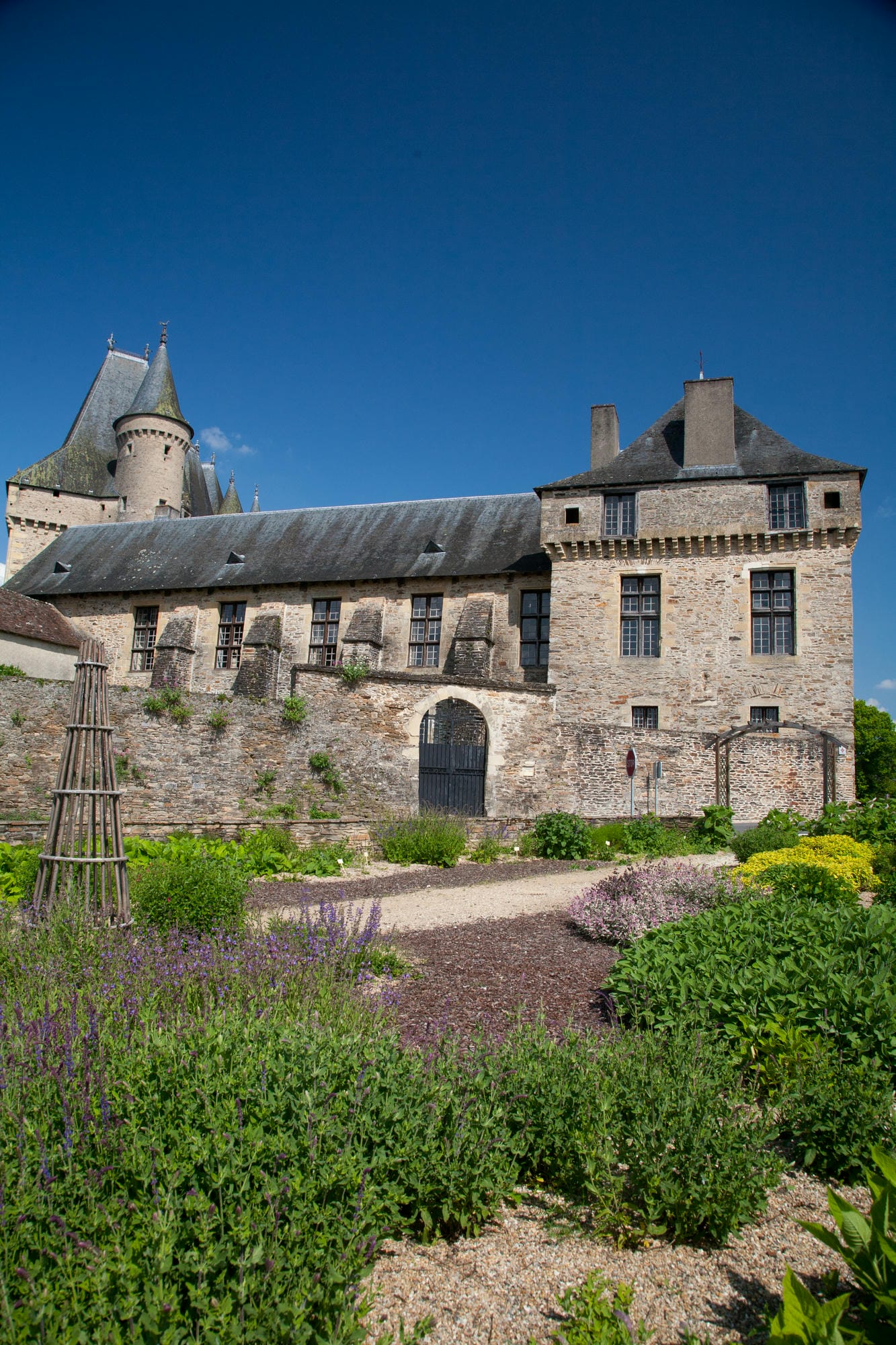
In the 17th century, the Marquis of Jumilhac had formal French gardens laid out on twelve terraces descending toward the Isle River, 45 meters below. The vagaries of history have left only a few remaining. Since 1994, the current Marquis has undertaken their restoration based on a 1777 model. Organized around the themes of Gold and Alchemy, these renovated gardens now offer a walk that is as beautiful as it is unexpected at the foot of the castle walls.
Night tours: when the castle reveals its mysteries
From June to September, the castle organizes night tours on Tuesday evenings (and Thursdays in July and August), starting at 9:30 PM. By the light of torches and candles, characters in period costumes guide you through the rooms and even the castle’s underground passages. Alchemy, mysterious frescoes, tumultuous history… the night turns the visit into a true fairy tale.
The castle is open all year round (except Christmas and New Year’s Day), with hours varying by season. From June to the end of September, it is accessible daily from 10:00 AM to 7:00 PM. Children will find quizzes and wooden medieval games at the reception. A gift shop and a tea room complete the experience.
Practical information
Château de Jumilhac-le-Grand — Classified Historical Monument
Self-guided and guided tours
Night tours (June–Sept, Tue. at 9:30 PM)
The castle has also served as a backdrop for several film and television productions, including Brotherhood of the Wolf (2001) and the series Nicolas Le Floch.