

Over 600 years of history in the heart of the Périgord Vert
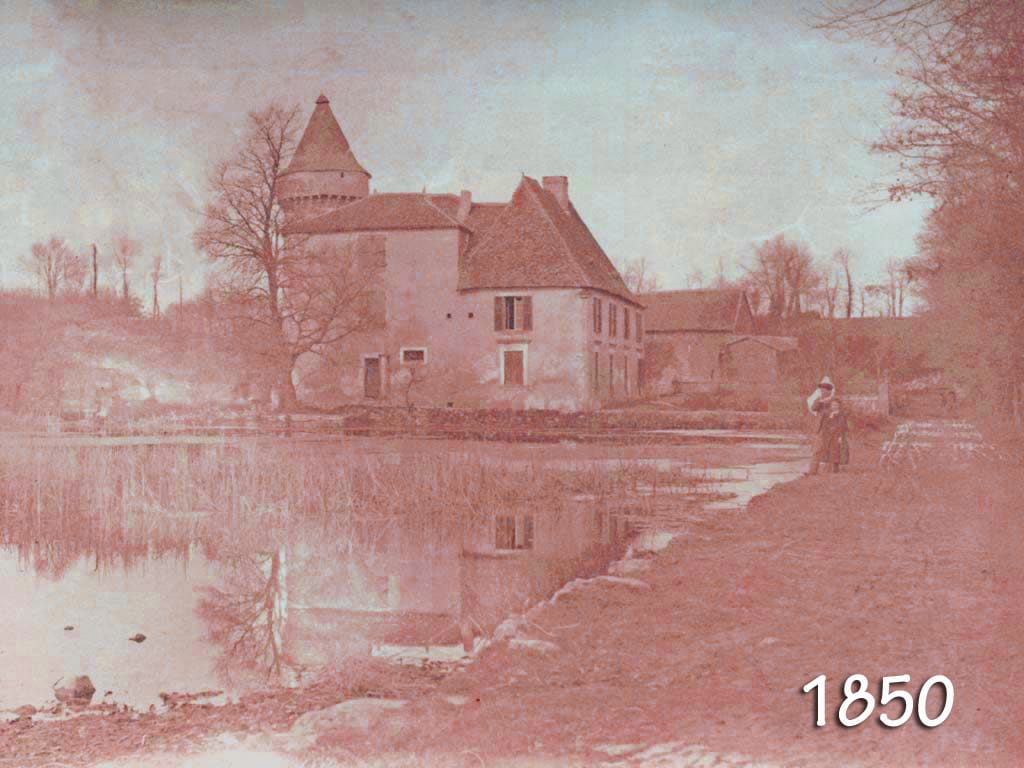
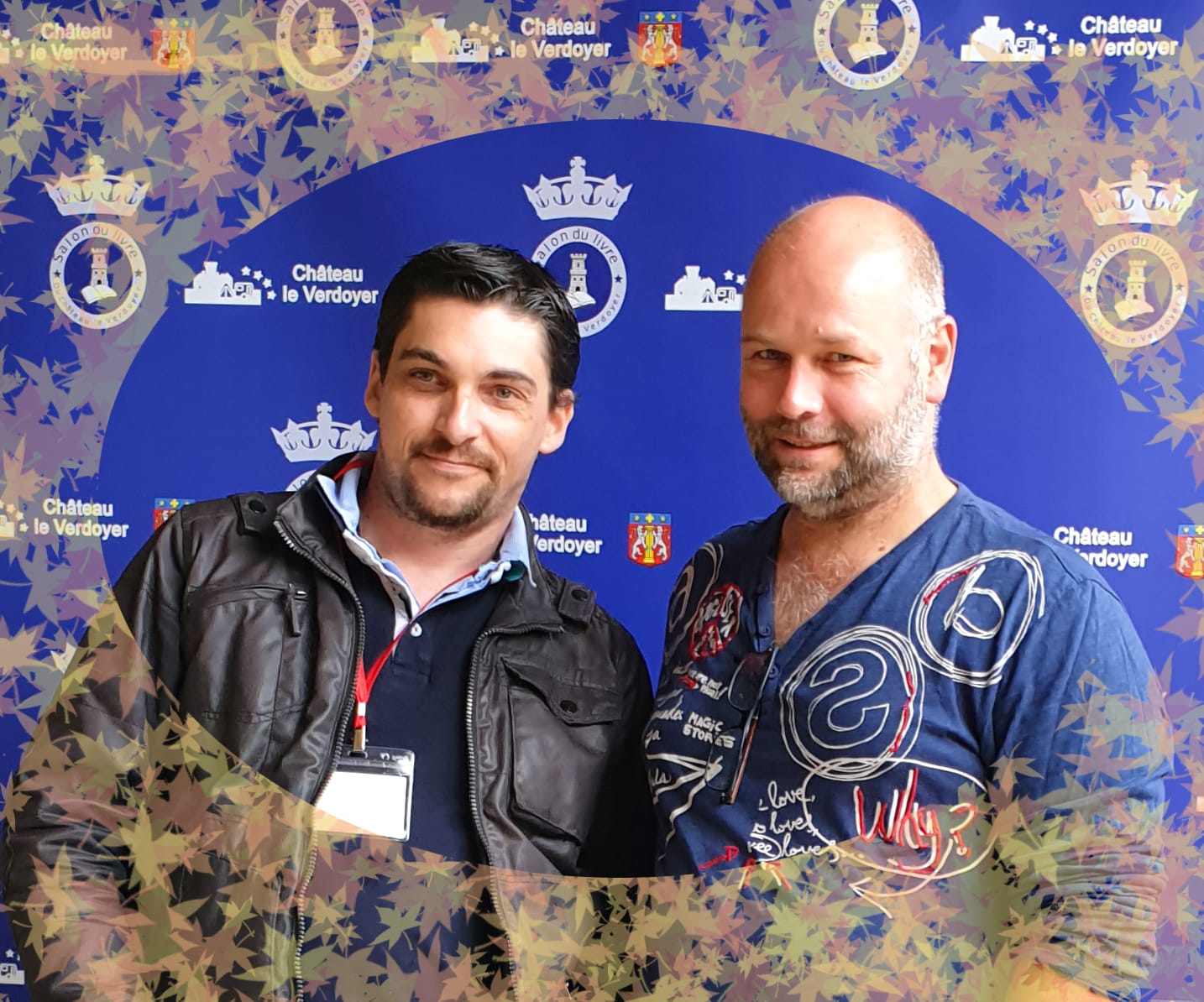
“What is the history of the château?” This question has been asked thousands of times over the years. Let us share the fascinating saga of this jewel of the Périgord, from its medieval origins to its modern renaissance. The writer Raphaël GRANGIER, who has written 3 books partly set at Le Verdoyer and who helped us organize the Book Fair for several years in July, has successfully reconstructed the early centuries of the château’s occupation and provided us with this beautiful story:
A little history…
Ah, the Château le Verdoyer campsite. A flowery and pleasant setting where it is good to rest one’s body and unpack one’s bags for a while. But do you know its history? No…
Then let us tell you a little about it.
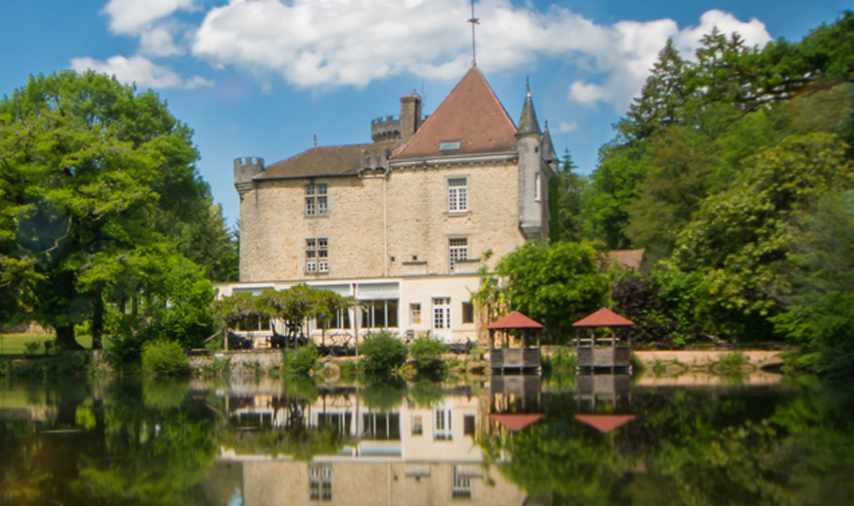
The Medieval Origins (1385-1450)
To do so, you must close your eyes and join us in 1385. The Périgord region is wooded, sparsely populated, and we are just after the second phase of the Hundred Years’ War, at the very moment when Charles V is launching his reconquest of France.
Finances are at an all-time low, but the monarchy is still there. Carts covered in hay, pulled by a few oxen, travel the dilapidated paths between Saint Pardoux La Rivière and Nontron.
A little further on, the Connezac estate. Hélie de Pindray was born that very year and, in his adolescence, became a squire at the château. His distinction as an accomplished horseman honored him, and the Lord of Connezac consented to celebrate his marriage to the commoner Marguerite de Bertin. The monarchy’s finances filled up again, while our young citizens, ennobled by the lord, gave birth to a young girl in 1430, whom they named Jeanne.
The Lord of Connezac gifted his first squire a farmhouse as well as a plot of land stretching from Mazerat to Saint Saud, all the way to the edge of the parish of Nontron. This farmhouse became a hunting lodge, and the son of the nobleman Camain, Joseph, now Lord of La Prade, would go there to hunt.
His unexpected visit became the ideal meeting for Jeanne’s parents, and she would eventually be married to him.
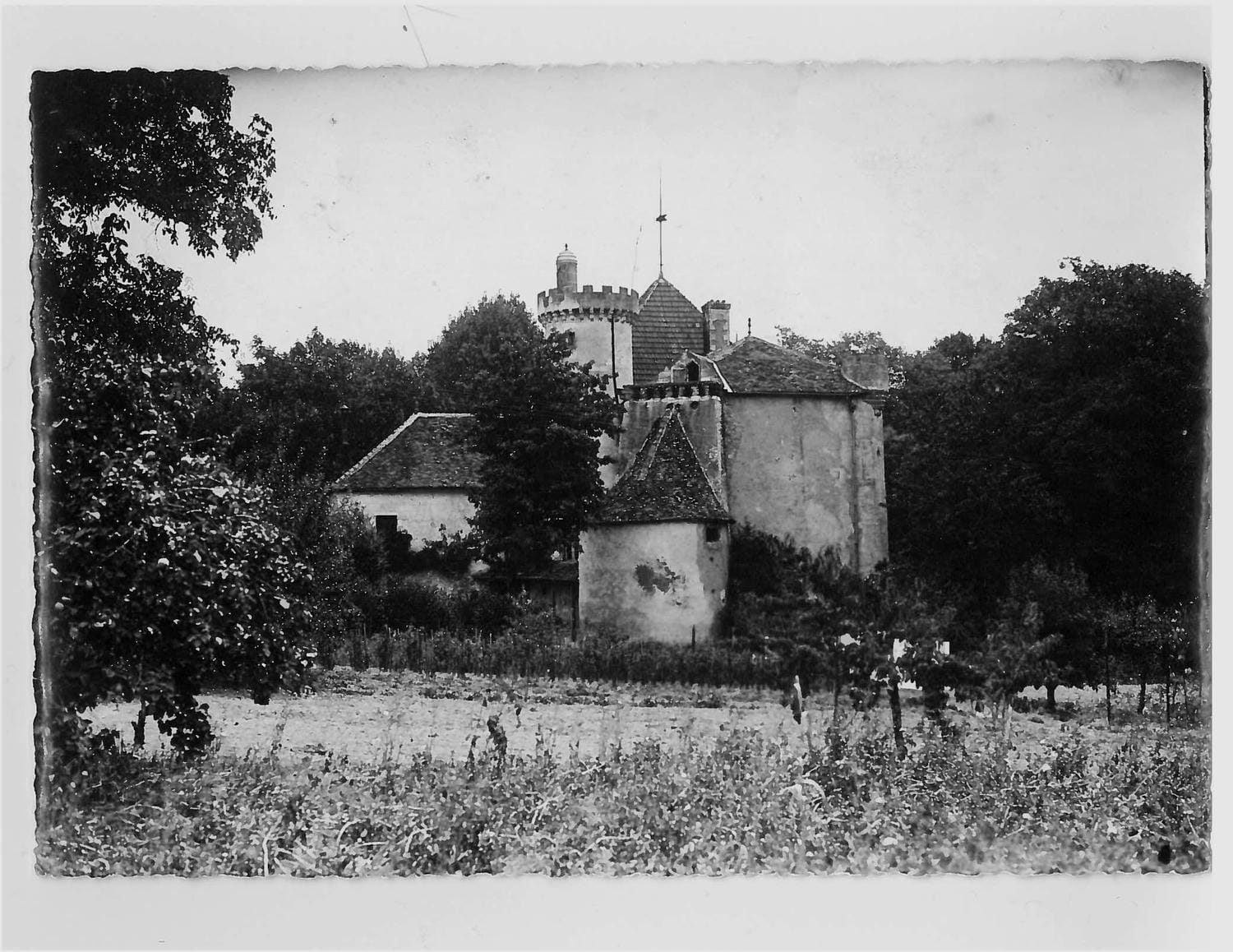
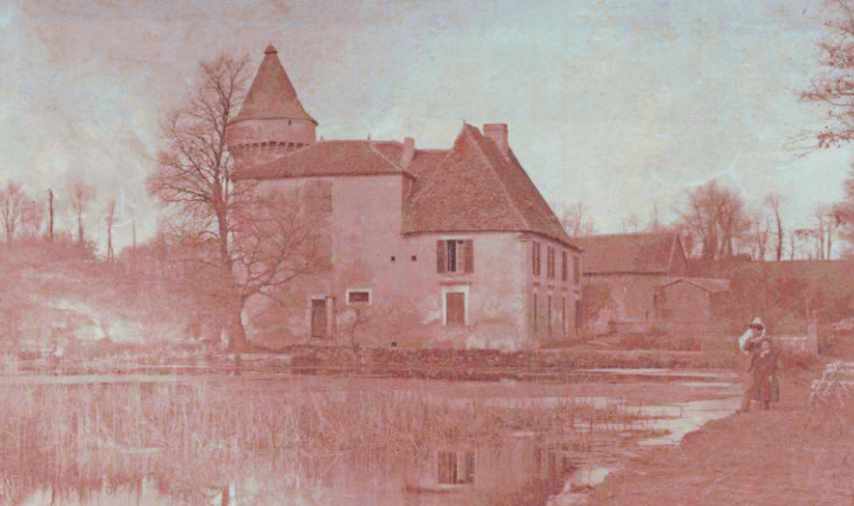
To mark the union, the first version of the château was built. A medieval structure featuring arrow slits and defensive towers, with a single floor and a single continuous space, which was completed around the birth of their son Bertrand (the first of his name) around 1450.
The Rise of the Camain Family (1450-1540)
The acquisition of the lands and the estate had indeed been made through a gift from a nobleman, but recognition had not yet been granted, and the title even less so. Thus, Bertrand had to wait 25 years after the death of the Dauphin Pastoureau for his will to be recognized by an assembly in the town of Nontron, ensuring that his name—registered as Noble caste in his testament—was recognized as such and the title granted to him.
Joseph bequeathed the château and the title of nobility to his only son who, once married, had two sons and a daughter, Léonarde. The epidemic wave of the plague finished sweeping through France, and two of his children did not survive it. The most tenacious of the siblings, Jean, became a counselor at the Parliament of Bordeaux and took over the inheritance of the lands and the château, which he thereafter visited only for hunting, until his wedding to Françoise de Laborie.
A great celebration was held where the lords of Nontron, priests, abbots, and the lord of Saint Pardoux were invited. Jean Camain then decided to stay on his lands more often, especially since the journeys to Bordeaux exhausted him. Françoise was attractive, not very cultured, but very maternal. Jean had five children with her. All of them were quite boisterous, and one of them, born barely two years after their union, took the name of his grandfather, Bertrand.
The Conflict of Inheritance
By lineage, Bertrand (the second of his name) also entered Parliament like his father, while Thibault, born 8 years after him, distinguished himself by becoming a criminal lieutenant in Brive.
Since the two brothers were the only ones among the siblings to invest in the nobility, they split the inheritance of Jean, their father, in 1540, right under the nose of François—who nevertheless passed away 9 years after Bertrand—and the two sisters, Léonarde and Marie, who in any case could not carry on the name. The lands and the château were for shared enjoyment between the two brothers… For the moment, because one of them did not see it that way… Bertrand met the Bordeaux elite and invited them to his lands, where feasts, musical evenings, and entertainment were provided at his expense, squandering his father’s inheritance a little more each night.
The Golden Age and the Splendor of the Renaissance (1552-1600)
He married Jeanne de Maucamp in 1552, a daughter of a Bordeaux nobleman, and fathered not two, three, or four, but nine children. The last one cost his poor mother her life at birth. Among this entire line of young Camains, the eldest, born at the time of his parents’ marriage, whose name was given as a mark of respect to his uncle (Thibaud), married a certain Eleonore Eyquem de Montaigne, sister of the famous Michel Eyquem de Montaigne, who took advantage of this union for nearly thirty years to frequent the Château le Verdoyer and bring his suitors there.
Renaissance Transformations (1545-1600)
As for Thibaud—the uncle, this time—he married Bonne de Pourtenc, who passed away shortly after from an illness. Remarrying, he wed Lucrèce d’Alby in 1545, who pushed him to restore the château’s former glory. Lucrèce gave him two boys, one of whom remained a bachelor: Pierre Camain. His other son, François, shared the inheritance with Thibault.
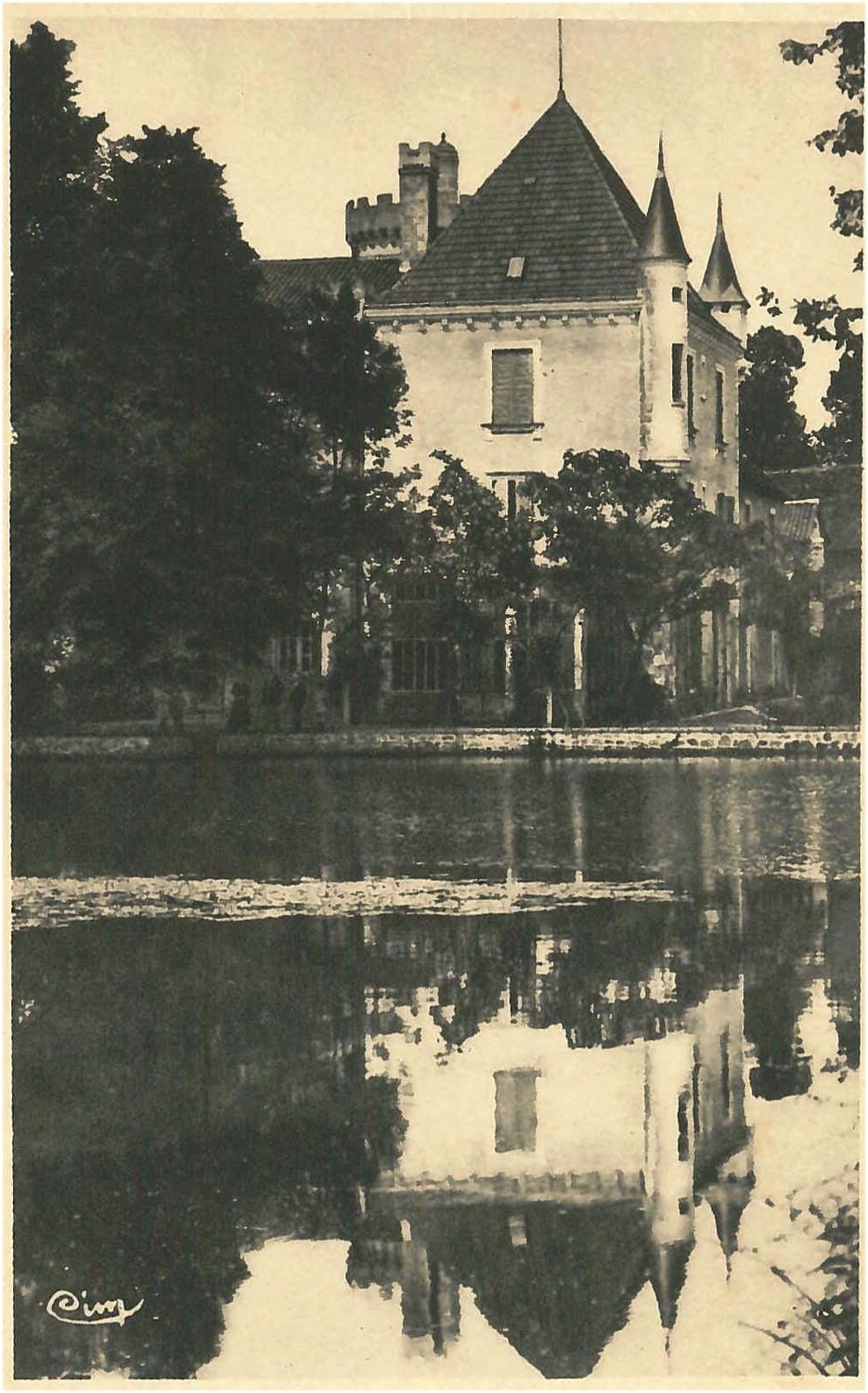
Once the latter passed away, Lucrèce pushed her son François into the nobility, encouraged him to impress his small court, married him off to Marie du Pescher, and in honor of his wedding, convinced him to modify the château into a more Renaissance style and add an extra floor.
During the work, the southwest tower caught fire, and the blaze was eventually brought under control, though not without damaging the crenelated tower. Lucrèce, losing her mind, blamed the fire on the other branch of the family, who saw the modification of the building only as a waste of money and, above all, a hindrance to their partying. With the work nearly finished, the entire family was reunited, but the rivalries between the two Camain branches ensured the meal ended in threats.
The Cursed Fireplace Backplate
The brothers and sisters of the other Camain line—Etienne, Marguerite, Marie, Catherine, Jeanne, and Thibaud, the husband of Eleonore—gifted a fireplace backplate to François, in which Lucrèce saw only threats, as it depicted alchemical symbols. No one knew if she was right or wrong, but Lucrèce passed away shortly after from poisoning (septicemia).
The Decline of the Camain Dynasty (1600-1691)
The two lineages never reunited after that meal. François and Marie du Pescher had only one son: Bertrand, named in honor of his grandfather. He married Louise Mallet, with whom he had two sons: Jean and Thibault. The inheritance was passed to the eldest, Thibault, who married a young woman of whom no trace has been found to this day. Their only son also took his grandfather’s name, François, and received the title of squire, Lord of Verdoyer, from the King’s Court and the Bishop of Angoulême. With his wife, Marie du Conan, they had a son, Antoine de Camain, squire, Lord of Verdoyer and Lord of Les Etangs, who married Gabrielle Saunier in Mazerat on December 3, 1691.
The Modern Era: The Renaissance of Verdoyer (1987-Present)
After centuries of transformations and several changes of ownership, the château experienced a true renaissance in 1987. Richard and Ineke Ausems, an adventurous Dutch couple, purchased this 14th-century castle and gradually transformed it into a magnificent holiday estate.
Their own story is a modern novel: having emigrated to France in 1971 with nothing in their pockets, they built stone by stone what has become today the 4-star Château le Verdoyer camping resort, blending historical charm with modern comforts.
For nearly 40 years, the Ausems family has perpetuated the welcoming spirit of the château, now managed by the new generation, Flo and Véro. The estate spans 23 hectares in the heart of the Périgord-Limousin Regional Natural Park, offering guest rooms, a gourmet restaurant, and camping facilities.