

About 20 kilometers from Camping Château le Verdoyer, following the Isle River gorges to the northeast, you will discover Jumilhac-le-Grand—one of the most charming villages in the Périgord Vert. Always caught between the Périgord and Limousin regions, the village carries this dual identity right into its architecture: local stone houses blend the sturdy Périgord style with characteristically Limousin slate roofs. And beneath its soil, gold—mined since the Gallic era—continues to capture the imagination.
The château, of course—but that’s not all
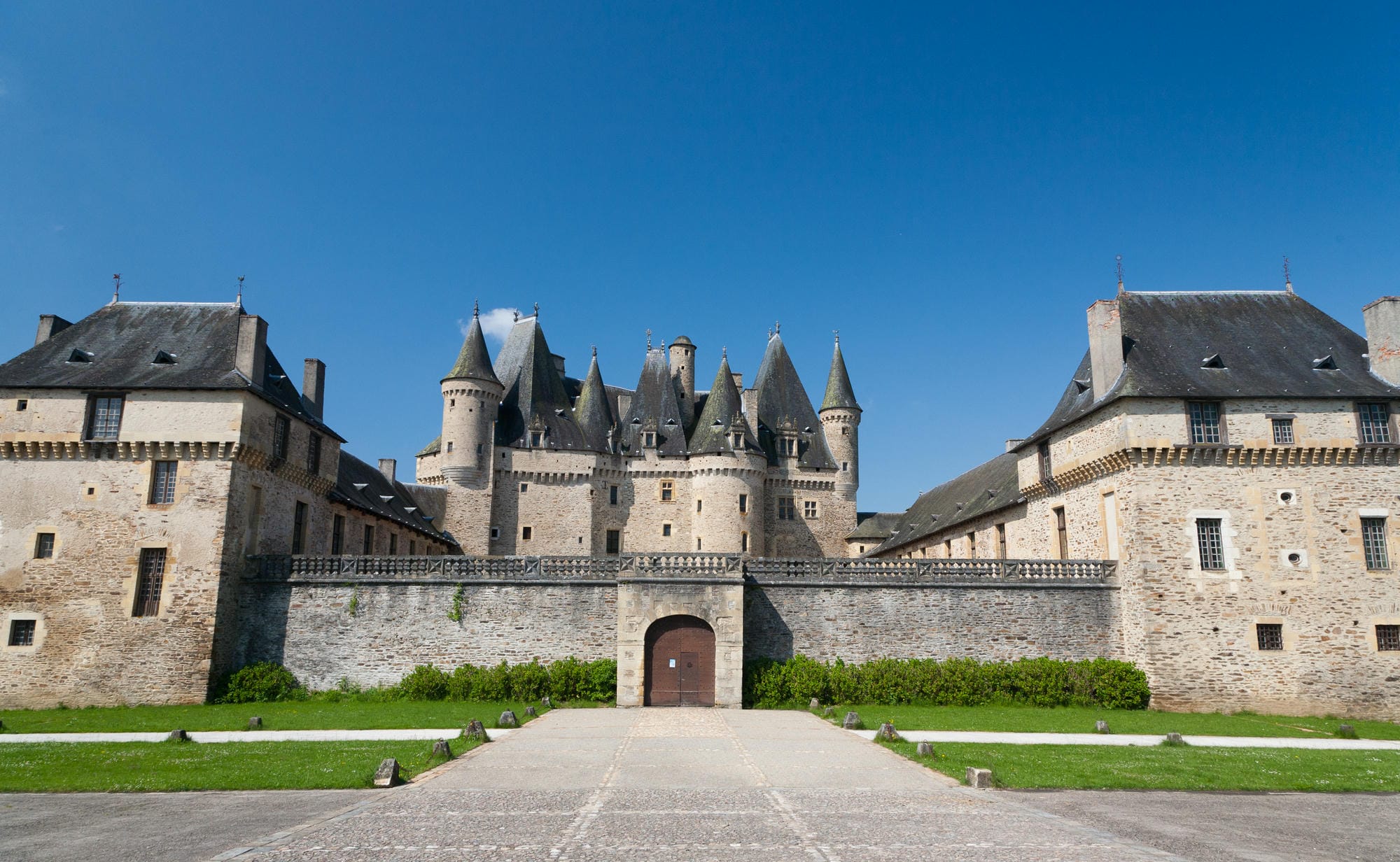
The Château de Jumilhac-le-Grand needs no introduction: this Historic Monument, perched on a rocky spur 40 meters above the Isle River, is famous for its alchemical roofs, considered unique in Europe. If you want to know everything about visiting, its legends, and its night tours, we have dedicated a full article on our blog.
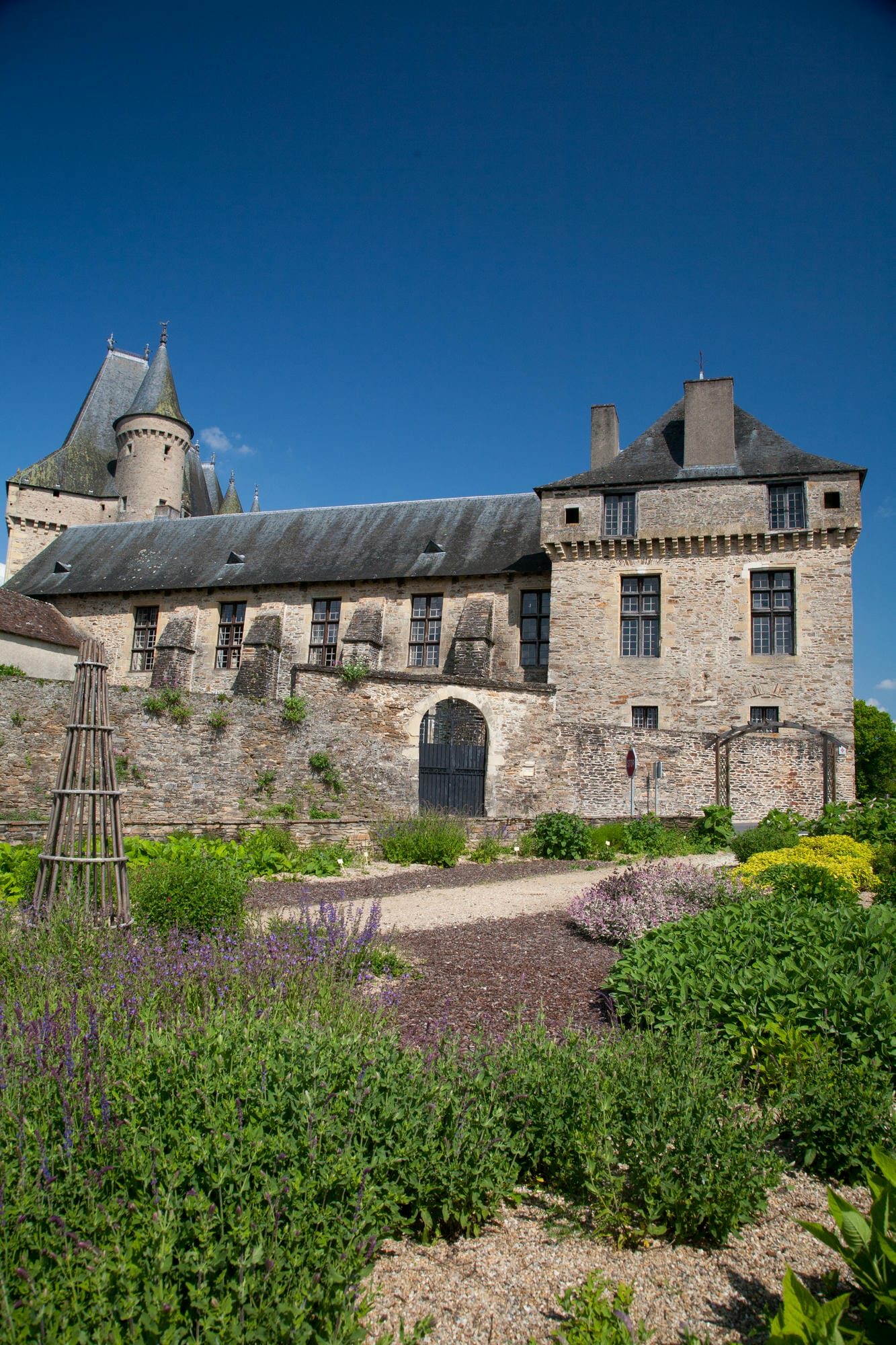
But Jumilhac is so much more than just its château. The village itself is worth exploring: wander through its narrow streets, gaze up at its flowered facades, and take the time to stroll along the banks of the Isle.
What to see in the village
Saint-Pierre-ès-Liens Church
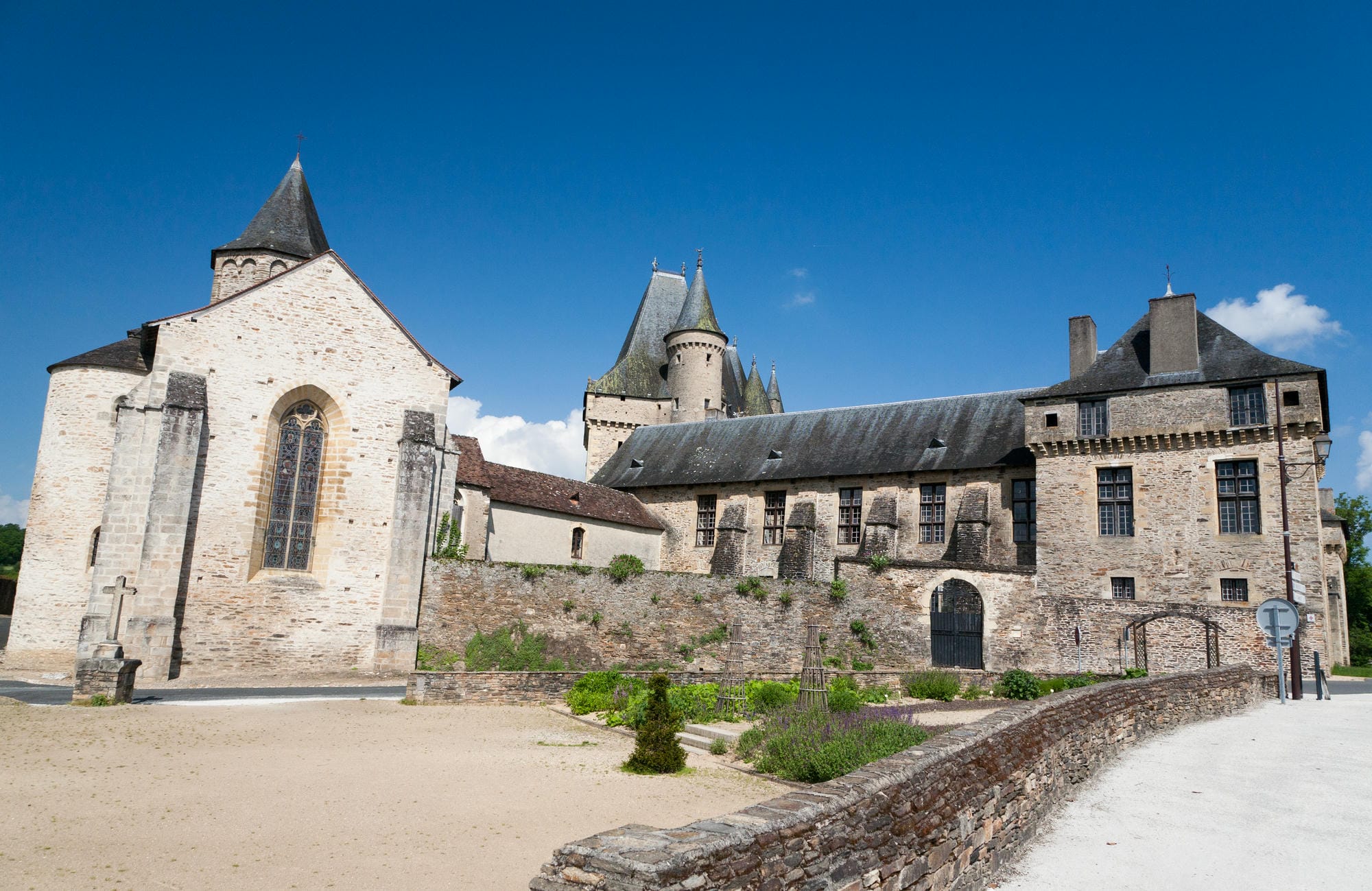
Just a few steps from the château, the Saint-Pierre-ès-Liens church has been a listed Historic Monument since 1925. Built in the 12th and 14th centuries, it blends a Romanesque portal and nave with a Gothic choir, and is distinguished by its remarkable octagonal Limousin-style bell tower, which plays with the light throughout the day. Until the Revolution, the lords of Jumilhac were buried here. A funeral “litra” (a painted frieze) bearing the coat of arms of the Marquis of Jumilhac is still visible in the transept.
The château square and the village alleys
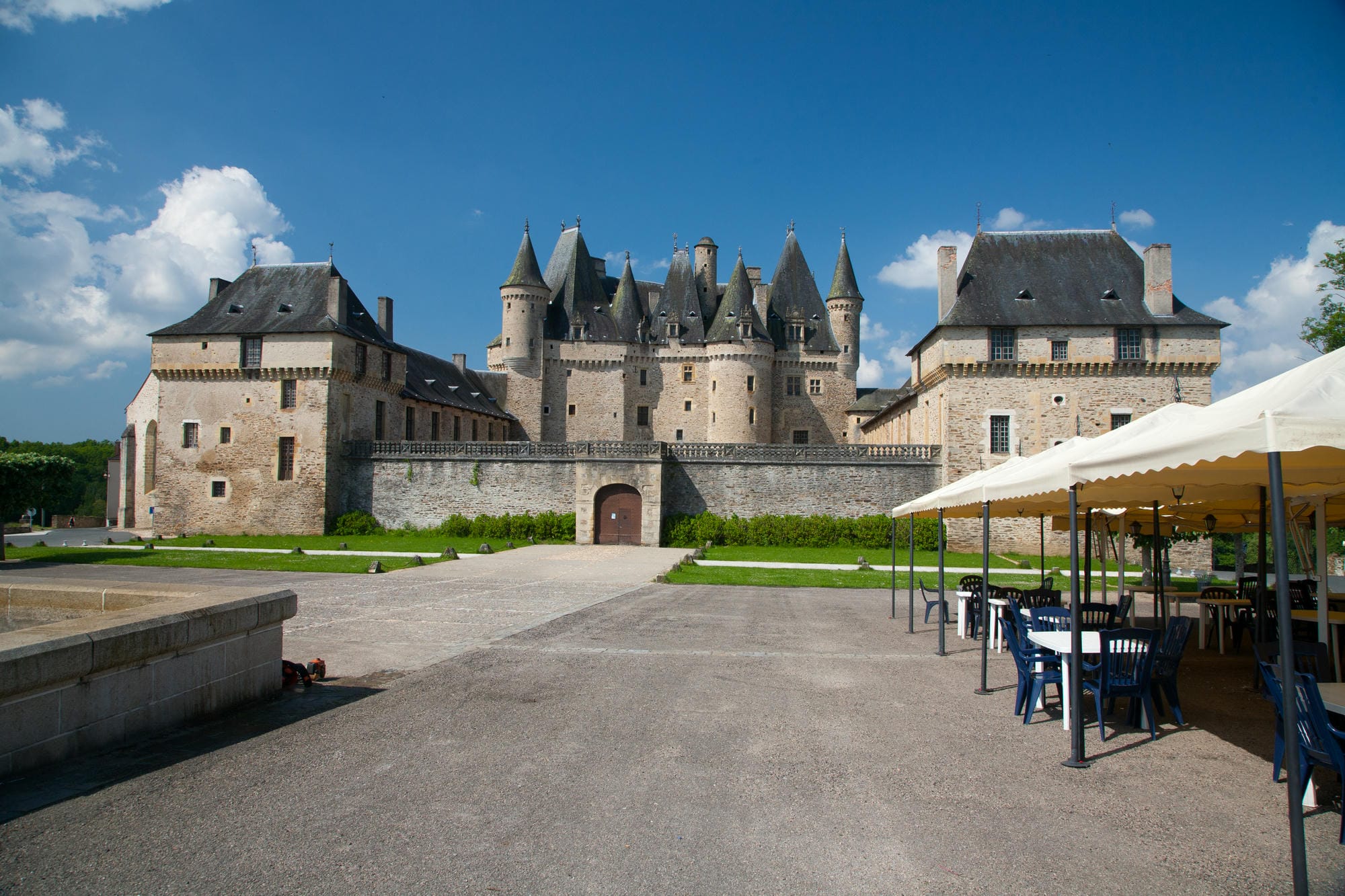
The main square, shaped like a crescent facing the high curtain wall of the château, sets the tone for the village: a fountain, a few shops, and the tourist office. From here, set off on foot to explore the Saint-Georges district, one of the oldest, with houses still bearing their construction dates carved into the lintels. A monolithic cross, a garden dedicated to the deportees of World War II, and stone-paved paths—the village tells its story in quiet whispers to those who take the time to listen.
Did you know that Eugène Le Roy, author of the famous Jacquou le Croquant, owned a house in Jumilhac-le-Grand? The main street is actually named after him.
The Gold Gallery (Galerie de l’Or)
Jumilhac jealously guards a secret: its subsoil is rich in gold, which was mined from the Gallic era through to the 20th century. The Galerie de l’Or, located in the Tourist Office, traces this fascinating history through a permanent exhibition—“Gold: origins, myths, and industries”—complemented by films and testimonies from former miners. You can see a reconstruction of an old mine gallery and finally understand why Antoine Chapelle, the builder of the château, was so obsessed with the philosopher’s stone.
During school holidays, family workshops and gold-panning courses are organized: an ideal activity for children to hunt for real nuggets in the river. The Gallery is open from April to October.
Contact: Pays de Jumilhac Tourist Office — +33 (0)5 53 52 55 43
Walking in Jumilhac: the must-dos
The Bridges Loop (5 km — easy)
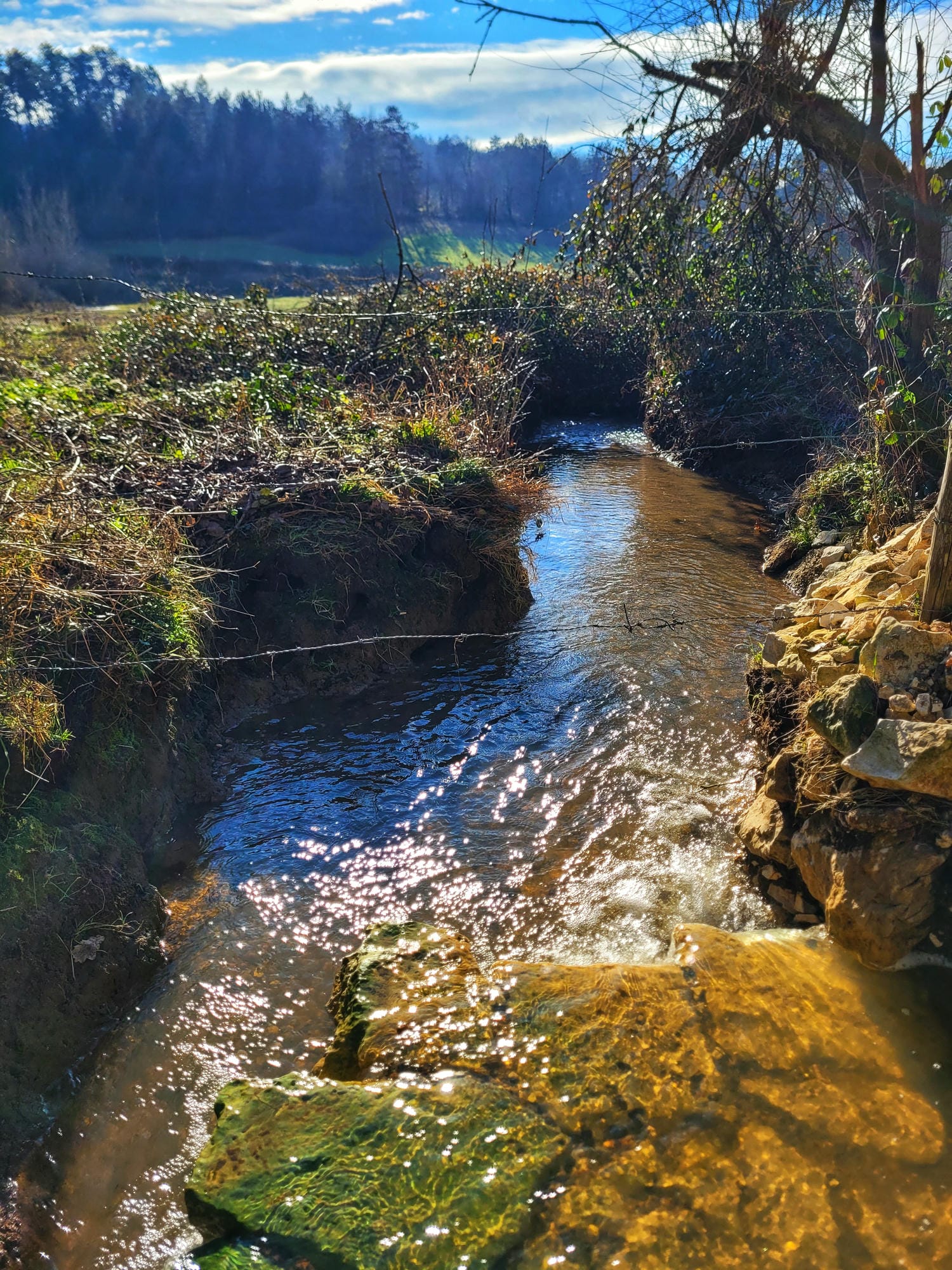
This is the classic village hike. Entirely shaded and away from traffic, it runs along the Isle River at the foot of the château and crosses several bridges—they say you can count them on the fingers of one hand. Along the way, you’ll see a small early 20th-century power plant and a fish ladder, then head back up to the village via the old road. Departure from the château square parking lot. An ideal route for families, even in hot weather. Here is the route on Cirkwi.
The Gold Trail (6 km — moderate difficulty)
For hikers who want to learn more about the region’s mining past, this 6 km circuit explores former gold extraction sites around the village. Hiking maps are available at the Tourist Office. Here is the route on Alltrails.
Terra Aventura: “Fly, you fools!”
Jumilhac is also a stop on the Terra Aventura trail, the great treasure hunt of the Périgord. The local route is called “Fly, you fools!“—a direct allusion to the legend of Louise de Hautefort, the Spinner prisoner of the château. Downloadable via the Terra Aventura app, it allows you to discover the village through games and riddles as a family.
The Richard the Lionheart Route
Jumilhac-le-Grand is also a stop on the Richard the Lionheart Tourist Route, which links several medieval castles and fortresses between the Périgord and Limousin. This route recalls that the village, situated on the borders of the two provinces, formed a strategic line of defense against Visigoth, Saracen, and later English incursions. Specific road signs—a crowned lion with an arrow-pierced heart—mark the route.
Practical: know before you go
Distance from Camping Château le Verdoyer: approx. 20 km, or a 25-minute drive.
Jumilhac Tourist Office: Place du Château — +33 (0)5 53 52 55 43. Not to be missed: the “Pas à pas” discovery booklet for the village, available upon request, and the adventurer’s logbook for exploring the village as a family.
Municipal swimming pool: Jumilhac has an outdoor swimming pool open during the summer season, with a large basin and a sunbathing area.
Dining: A few eateries around the château square offer traditional family-style cuisine. The château’s tea room welcomes visitors during the season.
Jumilhac-le-Grand, in the heart of the Périgord Vert and the Regional Natural Park
Jumilhac-le-Grand is fully integrated into the Périgord-Limousin Regional Natural Park, a vast protected area of meadows, chestnut forests, crystal-clear rivers, and hedgerows where otters, storks, and wild orchids coexist. The village is also a gateway to the Flow Vélo, the cycle route that runs along the Isle from Thiviers to the Atlantic, passing close to the village.
From Le Verdoyer, Jumilhac naturally fits into a beautiful day of discovery: the morning at the château, the afternoon walking along the Isle, and in the evening—why not—a torchlight night tour in July or August.
Want to know everything about the Château de Jumilhac-le-Grand? → Read our dedicated article